
Loading...
Ground moisture under your home damages wood, raises energy bills, and affects the air your family breathes. We install vapor barriers that seal it out - done right, with materials built to last in West Texas conditions.
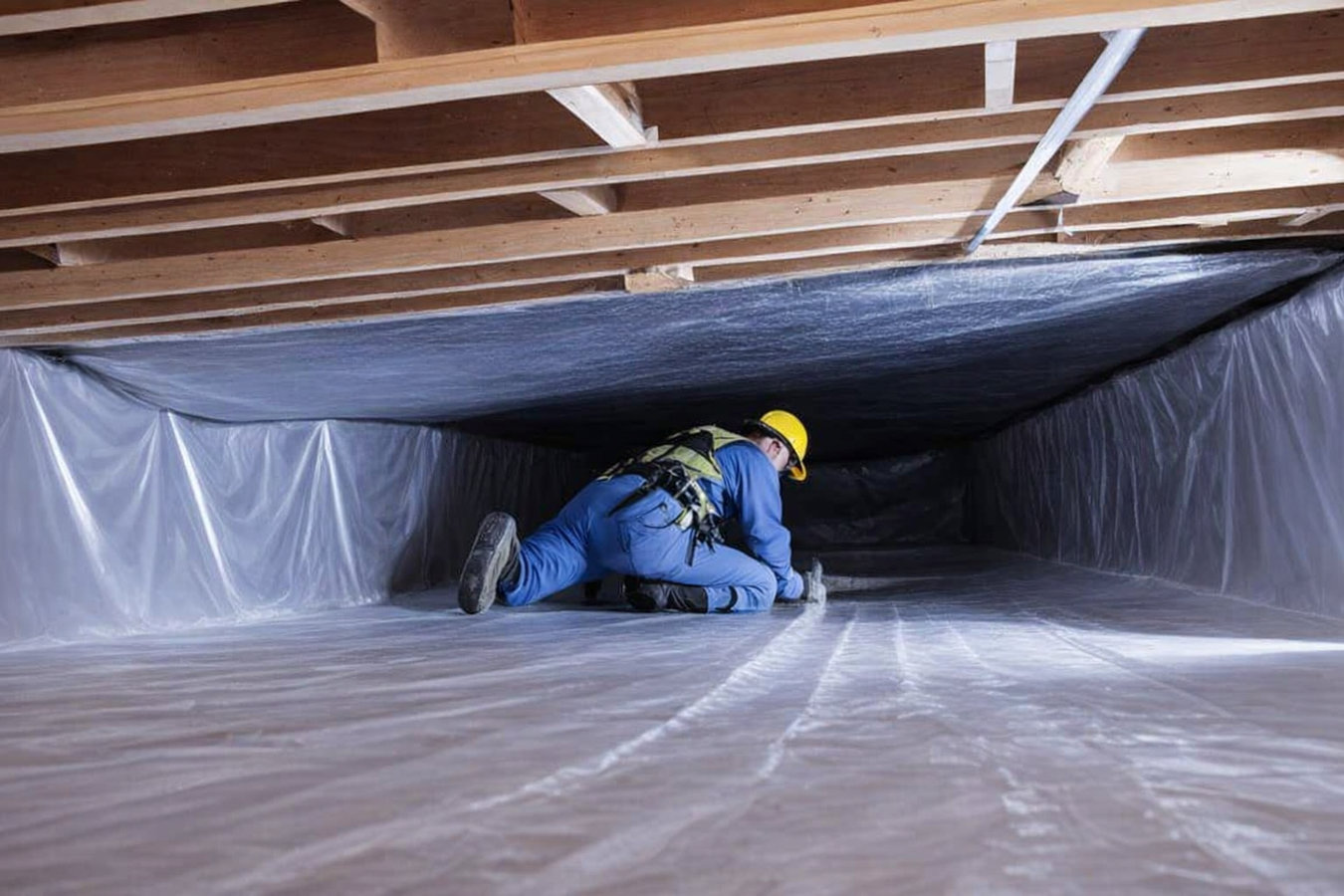
Vapor barrier installation in Big Spring places a sheet of heavy-duty plastic directly on the crawl space floor to block ground moisture from rising into your floors, framing, and indoor air, with most jobs completed in one day and no need to vacate your home during the work.
The soil under Big Spring homes holds moisture differently than most homeowners expect. The clay and caliche layers that make up much of Howard County absorb water during rain events and release it slowly as vapor - long after the surface looks dry. Many Big Spring homes built in the 1940s through 1970s were never given any protection against this, and the bare dirt crawl space has been sending moisture into the wood structure above it ever since.
If your home also has air leaks in the attic or walls, a vapor barrier works best as part of a broader approach to sealing the thermal envelope. Our attic air sealing service addresses the top of the house while the vapor barrier handles what comes up from below - both sides working together to reduce the load on your air conditioner.
If you notice a damp, earthy odor coming from your floors, vents, or closets - especially after rain or during late summer - moisture is rising from the soil beneath your home. In Big Spring, this often follows the fast, heavy rains that can occur during storm season, when the ground absorbs water quickly and pushes vapor upward. The smell usually means the problem has been building for a while before you notice it.
Wood subfloors that have absorbed moisture over time begin to soften and flex underfoot. If you notice a spot in your hallway or near a bathroom that feels different than it used to - a little bouncy or slightly lower - that is worth investigating. In older Big Spring homes with original crawl spaces, this kind of floor softness is often traced back to years of uncontrolled moisture with no barrier in place.
If you or a plumber has looked into your crawl space and seen water droplets forming on pipes or metal ductwork, that is a clear sign the space is too humid. Condensation means warm, moist air is meeting cooler surfaces - and the same moisture is affecting your floors and framing above. This is especially common in Big Spring homes after spring storms when ground moisture spikes suddenly.
If your cooling costs seem out of proportion to what you would expect, excess crawl space moisture could be part of the reason. Your air conditioner works harder when the air it pulls in carries more humidity. In a Big Spring summer, where your AC may run nearly around the clock, even a modest efficiency loss adds up quickly on your monthly bill and is worth investigating.
We install vapor barrier material in crawl spaces, and can also address basement floors and walls where moisture intrusion is a concern. Every job starts with a physical inspection of the space so we understand exactly what we are working with - the size, the current moisture conditions, and whether any prep work is needed before the barrier goes in. Material thickness is matched to the conditions found during inspection, not chosen by default.
Seams are overlapped and taped so moisture cannot sneak through the joints, and edges are secured to the foundation walls rather than left lying loose. If you want to address moisture and thermal performance together, we coordinate vapor barrier installation with our crawl space vapor barrier service and can pair it with attic air sealing for homeowners who want a more complete approach to moisture and energy performance in the same project.
Best for pier-and-beam homes in Big Spring where the goal is to seal the dirt floor and protect the wood framing from ongoing ground moisture.
Right for homes in lower-lying areas or those with a history of moisture intrusion - barrier covers the full floor and is secured up the foundation walls for complete protection.
Big Spring averages fewer than 17 inches of rain per year, which makes it one of the drier parts of Texas. But when rain does arrive - especially during spring thunderstorm season - it can come fast and in large amounts. The clay and caliche soil common across Howard County absorbs water and then swells, and when it dries out it shrinks and cracks. That repeated movement is hard on any material sitting on it, including vapor barrier sheeting that was not properly anchored or chosen for durability. This is why material thickness and correct installation technique matter more here than in areas with stable sandy soil.
Homes in Big Spring's established neighborhoods - particularly those built in the 1940s through 1970s - often have crawl spaces that have never had a vapor barrier, or that have deteriorated original plastic sheeting from decades ago that is no longer doing its job. Homeowners in Andrews and Lamesa face the same conditions, and we bring the same inspection-first approach to every job across the region. According to the U.S. Department of Energy, properly sealed and protected crawl spaces are one of the most effective ways to improve a home's energy performance and indoor air quality.
We ask a few basic questions about your home - age, whether you have noticed smells or soft spots, and where the crawl space access is. We reply within one business day to schedule a free on-site visit, and we show up prepared rather than guessing over the phone.
We physically inspect the space - checking the soil, looking for standing water, measuring the area, and assessing any signs of moisture damage to the framing above. You do not need to go in yourself. We come out and walk you through what we found in plain language before any pricing is discussed.
You receive a written estimate that spells out exactly what is included - area covered, material thickness, whether old material will be removed, and any prep work. We do not quote verbally only. A written scope gives you something concrete to compare if you are getting multiple estimates, and protects you from surprises on installation day.
The crew lays the barrier across the full crawl space floor, overlaps and tapes all seams, and secures edges to the foundation walls. Most jobs are completed in one day. Before we leave, we walk you through what was done and point out anything you should keep an eye on - so you leave the conversation knowing exactly what is under your home.
Written quote, no obligation. We reply within one business day.
(432) 263-5195We provide a written estimate after an in-person inspection - not a ballpark over the phone. That written scope protects you and gives you a clear record of what was agreed to before the crew arrives. It also makes it straightforward to compare bids fairly if you are getting multiple estimates.
We work regularly in Big Spring and Howard County and know what crawl spaces in this area look like - older pier-and-beam construction, caliche soil that moves with moisture, and access hatches that are sometimes tight. That familiarity means fewer surprises on installation day and an assessment that reflects the actual conditions of your home.
The thickness of the sheeting we use is chosen based on the conditions found during inspection - not defaulted to the thinnest option that passes a basic check. In Big Spring's soil, which expands and contracts with moisture, thicker material holds up better over time and is worth the difference. The EPA's moisture and mold guidance makes clear that complete coverage with no gaps or thin spots is what separates a barrier that works from one that does not.
Every job starts with a free written estimate so you know the scope and the price before we begin. When the work is done, we walk you through it and document what was installed - you can see exactly what you paid for, not just take our word for it.
Taken together, these are the things that separate a vapor barrier installation done right from one that looks done from the outside but leaves moisture problems unresolved underneath. We do the job once, correctly - and you can see the work before we leave.
Seal air leaks in your attic to reduce the heat load on your home and help your AC run less during Big Spring summers.
Learn MoreFocused crawl space vapor barrier service - covering the full dirt floor to stop ground moisture from reaching your floors and framing.
Learn MoreMost jobs are completed in one day - call now or request a free written estimate before storm season arrives and ground moisture becomes a bigger problem.