Loading...
Warm floors and high summer bills often trace back to an uninsulated basement. We assess, seal, and insulate so your AC stops fighting the heat coming up from below.
Basement insulation in Big Spring creates a thermal barrier between your living space and the ground beneath your home, reducing how much heat moves up through your floors. Most jobs are completed in one to two days, and most homeowners stay in the house during the work.
In Big Spring, the main reason homeowners insulate the basement is cooling. When summer temperatures push past 100 degrees, heat seeps up through uninsulated floors and forces your AC to run longer cycles. Many older homes in the area were built with little to no basement insulation, so the problem has often been there since the house was constructed. If your floors feel warm even with the AC running, or your electric bills seem high for a home your size, basement insulation is worth a closer look. Pairing it with closed-cell foam insulation at the rim joists seals air leaks and insulates in a single pass.
The Department of Energy estimates that properly insulating and air-sealing a home can reduce heating and cooling costs meaningfully. In a climate like Big Spring's, where cooling costs dominate the annual energy budget, that payback tends to arrive faster than in more moderate climates.
If the floors on your first level feel noticeably warm during Big Spring's long summers, heat is likely moving up from an uninsulated or under-insulated basement ceiling. Your air conditioner is fighting that heat gain constantly, and it shows up on your electric bill every month.
Big Spring's cooling season is long and intense. If your bills seem disproportionately high compared to neighbors with similar-sized homes, poor basement insulation could be a contributing factor. Heat rises from the ground through uninsulated basement ceilings into your living space, forcing longer AC cycles.
Cool air in winter or warm air in summer that seems to come from the floor or lower walls points to air moving through gaps in your basement's envelope. In Big Spring's older homes, these gaps often exist around pipes, wires, and the rim joist framing that was never properly sealed when the house was built.
Homes built in Big Spring before the 1980s were often constructed with minimal insulation by today's standards - or none at all in the basement. If you have never had the basement inspected or updated, there is a good chance the insulation is either inadequate or missing entirely.
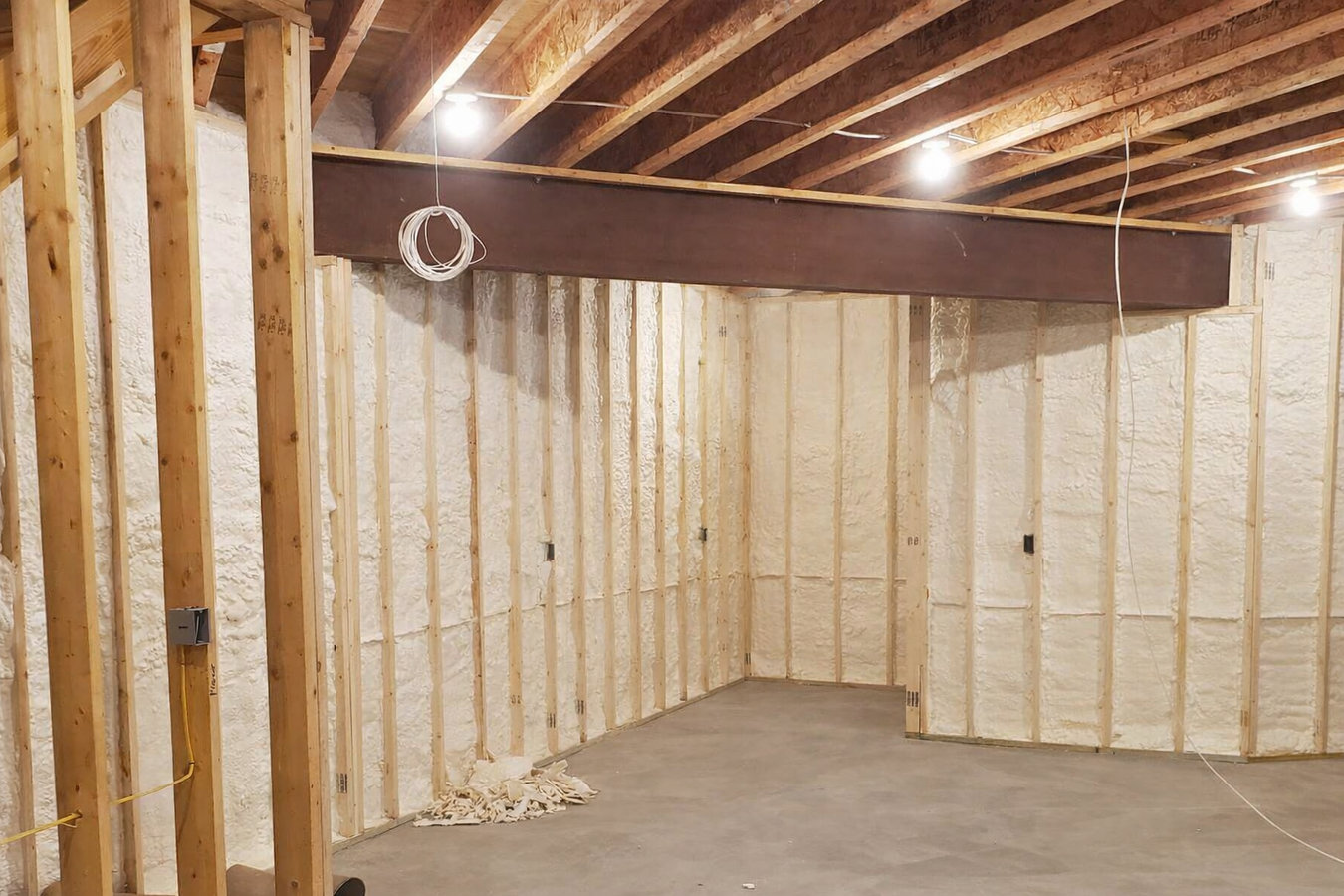
We handle basement insulation from the initial assessment through final walkthrough. Whether your basement is finished living space or an unfinished mechanical room, we recommend the right approach for your specific layout. For finished basements, wall insulation is usually the priority. For unfinished spaces, we typically insulate the ceiling - the floor of the room above - to protect your living area from the unconditioned space below. Rim joist sealing is included in every project, because that framing detail at the top of your basement walls is where a significant amount of conditioned air escapes. We also use crawl space insulation techniques where partial crawl space conditions exist alongside a basement.
Material choice depends on your basement's moisture history, layout, and budget. Spray foam bonds directly to the surface and seals air leaks at the same time. Rigid foam board is cut to fit and works well in finished spaces where spray foam would be overkill. We walk you through the options before any work begins, so you understand what you are getting and why.
Best for finished or conditioned basements where you want to keep the space comfortable and prevent energy loss through the foundation walls.
Ideal for unfinished basements used as storage or mechanical space - it protects the conditioned living area above from the unconditioned space below.
Addresses the most common air leak point in basement construction - the framing at the top of basement walls where significant heat escapes in older homes.
Two material options with different strengths - we recommend based on your basement's moisture history, layout, and how the space is used.
Big Spring sits in the southern High Plains of West Texas, where summer highs regularly exceed 100 degrees and the cooling season stretches from late spring well into fall. An uninsulated basement ceiling acts as a radiator, pushing heat up into your living space all day and making your air conditioner work harder than it should. Unlike homeowners in Houston or Dallas who deal with persistent humidity, Big Spring's dry climate - around 12 to 15 inches of rainfall per year - means moisture is less of a complicating factor, so the insulation itself tends to perform more predictably over time. Homeowners near Forsan and throughout Howard County face the same long cooling season and benefit from the same fix.
Big Spring's housing stock skews older, with many homes built in the 1940s through 1970s under standards that bear little resemblance to what we know today. Basements in this area are less common than in other parts of the country because caliche soil makes excavation difficult, but the homes that do have them often have original insulation - or none at all - that has never been updated. Residents out toward Coahoma and other nearby communities see the same pattern in their older homes. The good news is that a single basement insulation project can make a real, measurable difference in how the house feels and what it costs to cool.
We ask a few basic questions - basement size, finished or unfinished, and the problem you are trying to solve. You will hear back within one business day, and we can usually schedule an in-home visit within a few days of that first call.
A contractor walks through your basement, checks for any moisture or pest issues, and takes measurements. This visit typically takes 30 to 60 minutes. You will receive a written estimate that breaks down exactly what will be done and what it will cost - no obligation to sign anything on the spot.
Before the crew arrives, you clear stored items away from the work areas. The contractor will tell you exactly what needs to be moved. That is the main thing you are responsible for - the crew handles everything else from that point forward.
Most jobs are done in one to two days. You can stay in the house, but the basement will be off-limits during work hours. When the job is complete, we walk you through what was installed and where - including the rim joist details that are easy to overlook but matter for your results.
We will assess your basement, explain the options, and give you a written estimate. No pressure, no surprise fees.
(432) 263-5195Even in Big Spring's dry climate, a basement with any history of water intrusion needs to be assessed before insulation goes in. We look first and give you an honest report - we do not cover up a problem that will cost you more later. That sequence protects your investment.
Most contractors install insulation and stop there. We include air sealing at the rim joists - the framing at the top of your basement walls - because skipping that step means giving up a significant portion of the energy savings you are paying for. It is the detail that separates a thorough job from a fast one.
We work exclusively in Howard County and surrounding West Texas communities, and we stand behind our work. Every job starts with a free written estimate and ends with documented results, so you can see exactly what was done. The U.S. Department of Energy recommends vetting any contractor before an insulation project - we welcome that scrutiny.
You will know the exact scope, materials, and total cost before you make any decision. If something unexpected comes up during the job, we tell you immediately - not on the final invoice. That clarity is how we build the kind of trust that leads to referrals in a city where word travels fast.
Big Spring homeowners who have worked with us know that the job gets done right the first time and that we do not disappear after the invoice is paid. We serve this community and we plan to keep doing so - that makes us accountable in ways that out-of-town crews simply are not. Learn more from the U.S. Department of Energy's insulation guidance if you want independent verification of what good basement insulation should accomplish.
Rigid, high-performance foam that insulates and seals in one pass - ideal for basement walls and rim joists.
Learn MoreProtect the ground-level space under your home from moisture and heat with proper crawl space insulation.
Learn MoreCooling bills are highest when you wait - call today and lock in your installation date.