
Loading...
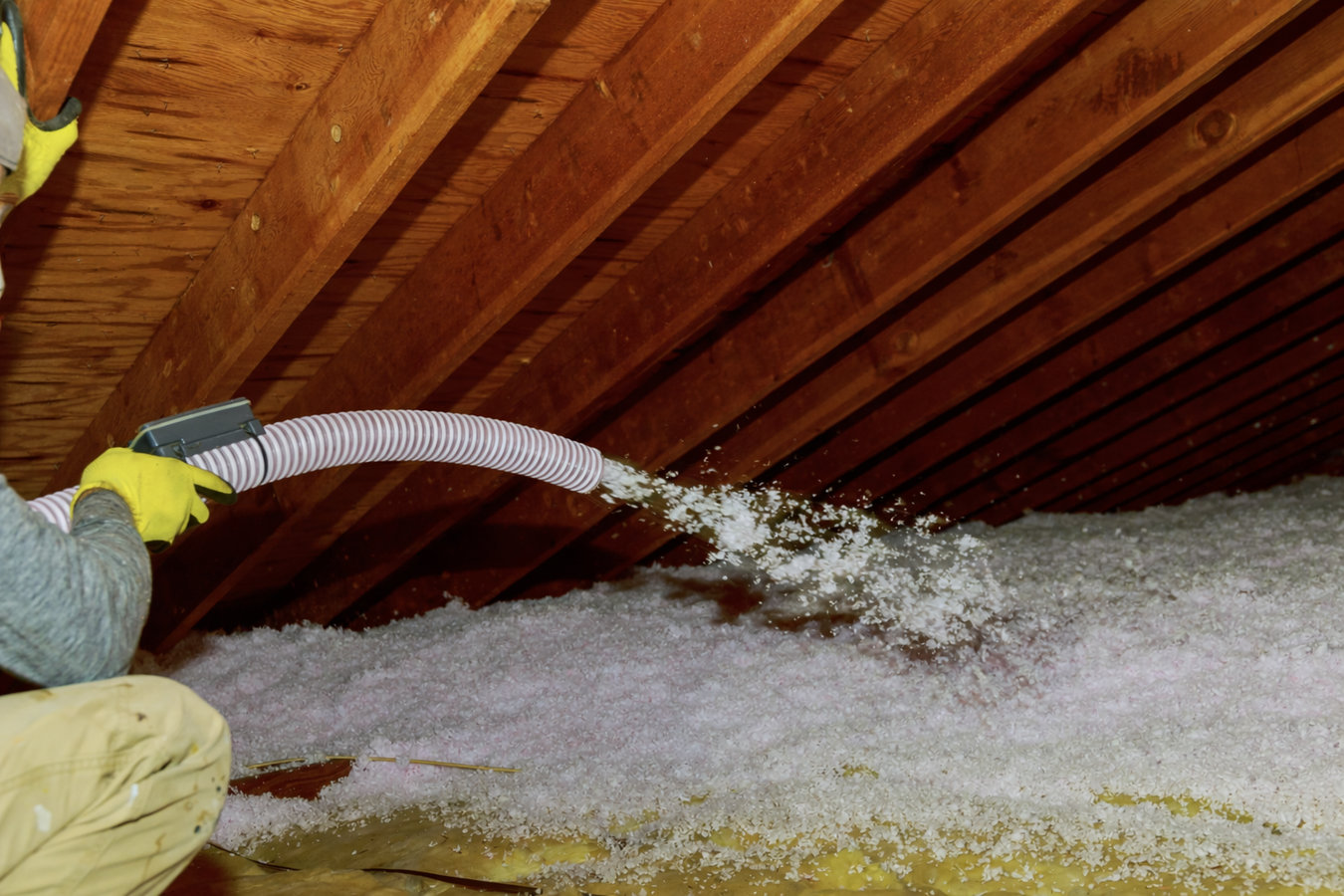
Loose-fill material blown into your attic or walls fills every gap, corner, and tight space - ending the hot spots and high energy bills that batts and boards leave behind.
Blown-in insulation in Big Spring fills your attic floor with loose cellulose or fiberglass material using a large hose connected to a machine, covering gaps and tight corners that rigid batts simply cannot reach. Most attic jobs are finished in a single morning, with no need to leave your home. If your rooms run hot from May through September and your electric bill climbs every year, thin or settled attic insulation is very likely the cause. Pairing blown-in insulation with attic insulation upgrades ensures every layer above your living space is working as hard as it should be.
Big Spring sits in a climate zone where the Department of Energy recommends significantly more attic insulation than many older local homes currently have. Homes built in the 1950s through 1980s were insulated to the standards of that era, which means many are running at a fraction of the protection they need. A quick peek into your attic with a flashlight is often enough to see whether your insulation is doing its job.
If your bill climbs sharply in May and does not come down until October, your home is struggling to hold conditioned air against Big Spring's heat. A well-insulated home in this climate should maintain a comfortable temperature without the air conditioner running almost continuously. When the AC never catches up on a 105-degree afternoon, thin attic insulation is one of the first things worth checking.
If a bedroom or living area on the top floor is always a few degrees warmer than the rest of your home, heat is likely pushing through an under-insulated ceiling. This is especially common in Big Spring homes built before the 1990s, where original insulation may have settled or was never deep enough to begin with. The fix is usually straightforward - adding blown-in material to bring the attic floor up to the right depth.
If you peek into your attic and can clearly see the wooden beams running across the floor, your insulation is almost certainly too thin. Adequate insulation for this climate should completely cover those joists - you should not be able to see the wood at all. This is one of the easiest self-checks a homeowner can do, and it takes about 30 seconds with a flashlight.
Big Spring's frequent high-wind events push fine dust through gaps around light fixtures, plumbing pipes, and attic hatches. If you notice dust accumulating quickly on surfaces after a windy stretch, air is moving freely in and out of your home through unsealed gaps. Those same gaps that let dust in are letting your conditioned air out, and blown-in insulation with air sealing addresses both at once.
We install blown-in insulation in attics, walls, and hard-to-reach spaces throughout Big Spring and the surrounding area. Every job starts with a proper assessment of what is already there - how deep, how settled, and whether there are air gaps that need sealing first. For attics, we use truck-mounted blowing equipment and spread material evenly across the entire attic floor, checking depth with markers throughout. We work alongside our home insulation services to cover every part of your home that is losing energy.
For homes where the existing insulation is worn out or contaminated, we can combine blown-in installation with a full removal and replacement. We also coordinate with attic insulation services to ensure the attic floor is fully sealed and covered before new material goes in. Air sealing is included in our standard assessment so you are not paying for insulation that warm air can simply bypass.
Best for homeowners whose attic insulation has settled, is too thin, or was never deep enough for this climate zone.
Suits older homes with minimal wall insulation, where drilling small ports and blowing in material is far less disruptive than tearing out drywall.
Ideal for homes with noticeable dust problems or persistent hot rooms, where gaps need to be closed before new insulation goes in.
Right for homes with some insulation already in place that just needs to be brought up to the recommended depth for Big Spring's climate.
Big Spring sits at about 2,400 feet on the Llano Estacado, exposed to open terrain and summer temperatures that regularly exceed 100 degrees. Your attic can reach 140 degrees or more on a July afternoon, and whatever insulation is up there is fighting that heat load every single day from May through September. Homes built during Big Spring's growth periods in the 1950s through 1970s were insulated to the standards of that era, which means many are running well below the depth recommended for today's climate guidelines. The payback from an upgrade here is faster and more noticeable than in milder climates - the savings show up on the very first summer bill after the work is done.
The high winds and blowing dust that come with West Texas weather add another layer to the problem. Fine dust infiltrates attic spaces through vents and small gaps, settling into existing insulation and reducing its effectiveness over time. We serve homeowners throughout Howard County, including nearby communities like Forsan, TX and Coahoma, TX, where many homes share the same older housing stock and the same West Texas climate challenges.
We ask a few basic questions - your home's square footage, its age, and whether you have noticed any specific problems. We respond within 1 business day and can usually schedule an in-home assessment within a few days of your first contact.
We visit your home and spend 20 to 30 minutes in the attic checking current insulation depth, looking for air gaps and leaks, and verifying attic venting. You do not need to prepare anything - just make sure the attic hatch is accessible.
You receive a written quote spelling out the target depth, total square footage covered, and whether air sealing is included. We tell you the final R-value you will end up with so you can hold us accountable before signing anything.
The crew arrives with a truck-mounted blowing machine. The work typically takes two to four hours. We walk the attic after to verify even coverage and depth markers, clean up, and remove all equipment and empty bags before leaving.
We respond within 1 business day - no long waits, no runaround. This estimate is completely free and comes with no obligation. After you submit, someone from our office will call to schedule a free on-site assessment at a time that works for you.
(432) 263-5195We have been installing insulation in Howard County since 2019 and know the local housing stock - older brick homes, settled attics, and the specific dust challenges that come with West Texas wind. That local experience means fewer surprises on installation day.
Every quote we provide specifies the target depth, the R-value you will end up with, and whether air sealing is included. You know exactly what you are getting before any work begins - and you can verify it when we are done.
Blowing in more insulation without sealing gaps first is money wasted. We check for gaps around light fixtures, plumbing, and the attic hatch before any material goes in, so your new insulation does not have to fight air leaks at the same time.
You do not pay anything to find out what your attic needs. We visit, assess, explain what we found, and give you a written quote. If you decide not to move forward, there is no charge and no pressure.
We are a locally owned insulation contractor based in Big Spring. Every job we take on in this area is one we stand behind - if the depth is not right or coverage is uneven, we come back and fix it.
A full-home insulation assessment covers attic, walls, and crawl space to find every place energy is escaping.
Learn MoreProper attic insulation pairs naturally with blown-in loose fill to stop heat transfer at every layer of your ceiling.
Learn MoreBig Spring summers start early - the sooner your attic is properly insulated, the more you save on your first hot-weather utility bill.