
Loading...
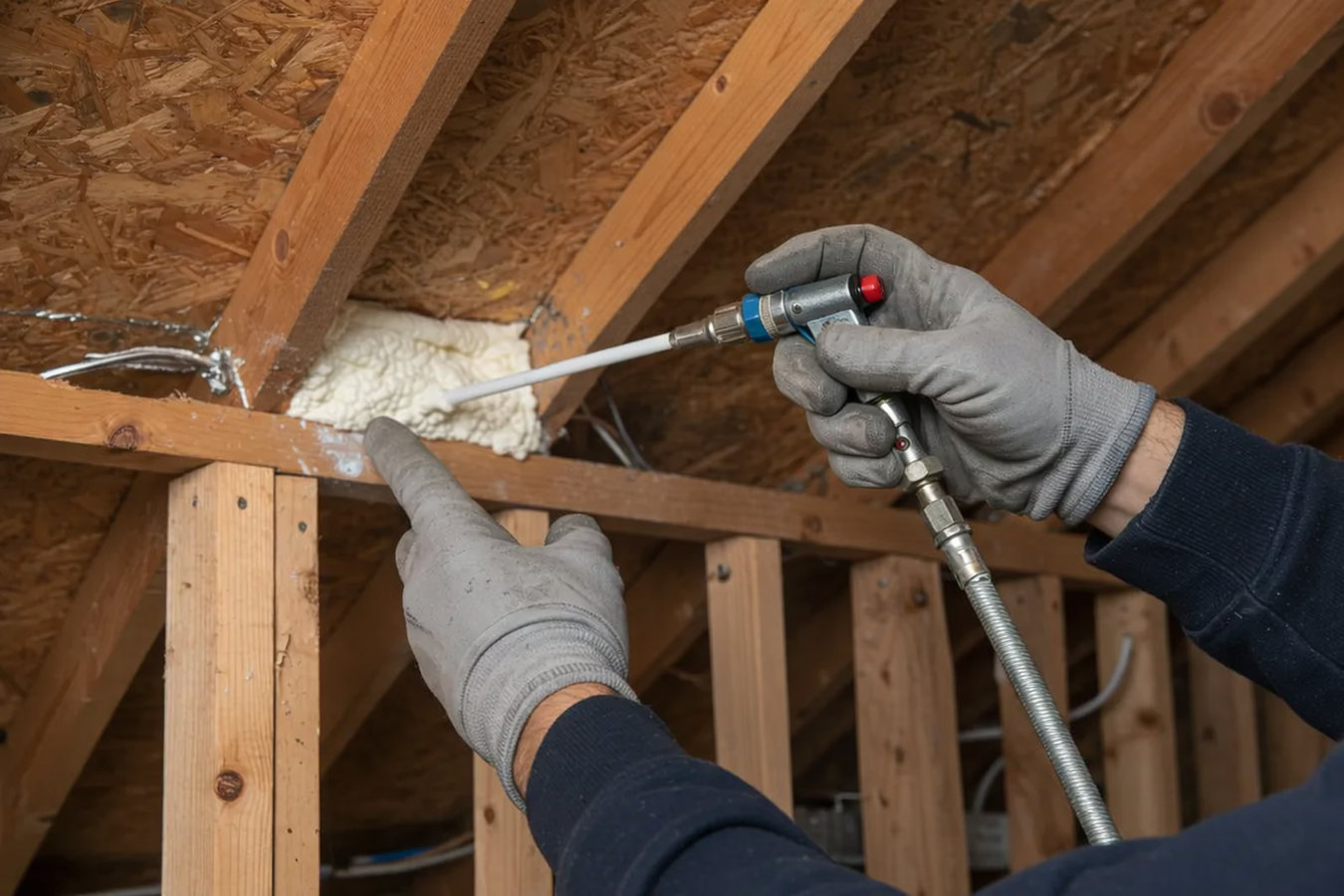
Gaps in your attic floor let 150-degree summer air pour straight into your home. We seal every opening so your AC can actually keep up - and your electric bill comes back down to earth.
Attic air sealing in Big Spring means finding and closing the gaps, cracks, and holes in your attic floor that let conditioned air escape and superheated outside air sneak in - most jobs take one to three hours, your home stays untouched during the work, and the difference shows up on your next electric bill.
Most homeowners assume adding more insulation is the answer to high cooling bills, but insulation only slows heat moving through solid surfaces - it cannot stop air flowing through gaps. In Big Spring, where your attic can reach 150 degrees on a July afternoon, every unsealed hole around a pipe, wire, or recessed light is a direct path for that heat into your living space. Sealing those gaps first is what makes the difference, and it makes any insulation you add afterward work the way it should.
If your home needs both air sealing and new insulation, our retrofit insulation service handles both in the right order - seal first, insulate on top - so you get the full benefit of the work.
If your cooling costs in June, July, and August feel out of proportion to your home's size, air leaking through your attic is one of the most common causes. Big Spring's triple-digit temperatures mean even a small amount of attic air infiltration puts a heavy load on your air conditioner. If your system seems to run almost constantly during the hottest weeks, that is a signal worth investigating before another summer passes.
Uneven temperatures from room to room - especially rooms that feel stuffy or hard to cool - often point to air leakage rather than an undersized air conditioner. Hot attic air tends to infiltrate most heavily in rooms directly below areas with the most penetrations, like bathrooms with exhaust fans or rooms with recessed lighting. If one bedroom always runs warmer than the rest of the house, the attic above it is worth checking.
West Texas dust is relentless, but if you find a thin layer of grit on shelves and countertops just days after cleaning, it is likely entering through gaps in your home's envelope - including the attic floor. Dust that comes in through air leaks tends to settle near ceiling registers and along baseboards. If this pattern sounds familiar, attic air sealing could make a noticeable difference in your indoor air quality.
The attic hatch is one of the most commonly overlooked air leaks in a home. Stand on a step stool and hold your hand near the edges of the hatch cover. If you feel warm air moving on a hot day, or cool air escaping when your AC is running, the hatch is not sealed. This is a quick no-tools check any homeowner can do in about 30 seconds, and it often reveals the largest single leak in the house.
We seal every penetration in the attic floor - around plumbing stacks, electrical wires, recessed light fixtures, exhaust fan openings, and the tops of interior partition walls, which are among the biggest sources of air leakage in older homes. We use foam, caulk, or rigid material depending on the size and type of each gap, and the work is done systematically across the full attic floor rather than hitting only the obvious spots. When the job is done, we can show you what was sealed and where.
For homeowners who need to address the whole thermal envelope, we pair attic air sealing with our air sealing services for the rest of the home. And when new insulation is needed on top of sealed gaps, our retrofit insulation team handles both in a single visit so you do not have to coordinate two separate jobs.
Best for homes where the main concern is hot air moving from the attic into the living space - closes every gap in the ceiling plane to stop the airflow at its source.
Suited for homes where the hatch itself is the largest single leak - we insulate and weatherstrip the hatch cover and frame so it stops acting as a direct vent between your attic and your hallway.
Right for older homes with non-airtight recessed lights - one of the most common sources of attic air infiltration in homes built before the 1990s.
Ideal for homes that need both sealing and new insulation - we seal all gaps first, then add or refresh insulation on top for the full comfort and efficiency improvement.
Big Spring regularly sees summer highs above 100 degrees, and an attic with unsealed gaps becomes a direct conduit for that heat into your living space. The older housing stock across Howard County - much of it built in the 1950s through 1980s - was constructed before air sealing was a standard part of the process. Homes from that era typically have open wall cavities connecting directly to the attic, along with unsealed gaps around every pipe and wire that passes through the ceiling. If your home was built more than 30 years ago and has never had this work done, there is a very good chance it needs it. The U.S. Department of Energy recommends air sealing before adding insulation for exactly this reason - insulation on top of an unsealed attic floor leaves most of the problem unsolved.
Big Spring is also known for persistent high winds and frequent dust events. Wind pressure pushes air through every crack in your home's envelope, and when that air carries fine dust it ends up coating surfaces indoors. Sealing the attic floor reduces the pathways that wind-driven dust uses to enter, which means cleaner air and less cleaning inside your home. Homeowners in Stanton and Coahoma face the same conditions across the region, and we bring the same thorough approach to every attic we seal.
We ask a few basic questions - your home's age, square footage, and what you've been noticing. We reply within one business day and can usually schedule a visit within a few days of your call.
Before any work begins we go into your attic to see what is there - existing insulation, where the gaps and penetrations are, and whether any moisture or ventilation issues need to be addressed first. This takes 20 to 45 minutes, and we walk you through what we found before quoting the job.
On the work day we move through the attic systematically, sealing every gap identified during the assessment - foam, caulk, or rigid material depending on the opening. The work stays entirely above your ceiling with no mess or disruption in your living spaces.
Before we leave we walk you through what was done and what to watch for in the coming weeks. Most homeowners notice improved comfort quickly - the clearest confirmation comes with the next electric bill.
We will assess your attic, explain exactly what we find, and give you a written estimate before any work begins. No pressure, no surprises.
(432) 263-5195Every estimate starts with a physical walkthrough of your attic - not a price over the phone. This means the number we give you reflects your actual home, not an average, and there are no surprises when the crew arrives to do the work.
Every job starts with a free written estimate that spells out the scope and the price before we begin. You know exactly what you are paying for and what will get done, so there are no surprises when the crew arrives or when the work wraps up.
Big Spring's older neighborhoods have specific air sealing challenges - open wall cavities, non-airtight recessed lights, and decades of unsealed penetrations built up over time. We know what to look for in homes built in the 1950s through 1980s because we have worked in them across Big Spring and Howard County.
When the job is complete we walk you through the attic - or show you photos - so you know what was sealed and where. You are not left guessing whether the work happened or trusting a receipt you cannot verify. A confident crew has no reason to hide their work.
Attic air sealing done right takes the right diagnosis before the right fix. Every home we work in gets a thorough assessment, a clear explanation, and a crew that treats your attic the way they would treat their own.
Add insulation to an existing Big Spring home without tearing out walls - attics, crawl spaces, and walls covered in a single project.
Learn MoreWhole-home air sealing that addresses gaps throughout the building envelope, not just the attic floor.
Learn MoreThe sooner the gaps are sealed, the sooner your AC stops working overtime - call today or request a free written estimate and we will get you on the schedule.